top of page


History
With a history steeped in art, entertainment and culture, the unique and endearing magic of Brydges Place dates back nearly 500 years.
1552
Through royal favour, land formerly owned by Westminster Abbey becomes part of the Bedford Estate.
1554
Queen Mary rewards Sir John Brydges, a loyal courtier and military commander, for his role in suppressing Wyatt’s Rebellion. He is granted Sudeley Castle in Gloucestershire and ennobled as Baron Chandos of Sudeley.

Sir John Brydges (right)
1598
William Dawson leased the land now part of the Bedford Estate for farming in the area till the 1620’s.
1609
At the age of 21, ambitious and well-connected Francis Russell marries Lady Catherine Brydges, Baron Chandos of Sudeley’s daughter. Their union forges a powerful alliance between the two families and places Francis at the centre of a new vision for London. In 1627, he becomes the 4th Earl of Bedford.

Lady Catherine Brydges (left), Francis Russel (right)
1630s
The Earl of Bedford pays £2,000 to secure permission from King Charles I to build London’s first residential square. He hires Indigo Jones, fresh from his studies in Italy, to replicate the elegance of Rome and Venice with a Palladian-style piazza on the muddy outskirts of London – now known as Covent Garden.

Area allocated to the development of Covent Garden
1637
Covent Garden’s construction is completed and is seen as a revolution in English urban planning – a statement of style, culture and control that becomes the model for Georgian development across the country. The striking simplicity of St Paul’s Cathedral’s construction alone cost £4,886. Among the streets that emerged from this new landscape were Chandos Place, Brydges Street and Brydges Place, a quiet echo to the alliance between Russell and Brydges.
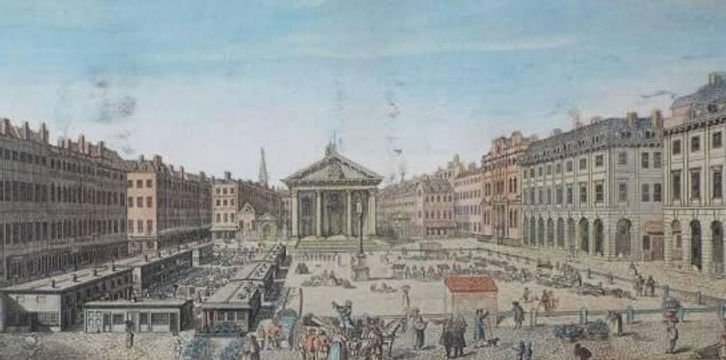
Covent Garden
1640s
The houses surrounding Covent Garden’s piazza are leased to wealthy gentlemen, merchants and foreign dignitaries at exceptionally high rates. The Bedford Estate earns between £5,000-£6,000 a year in rental income (over £1 million) from its Covent Garden properties, wealth that flows directly to the Russell family.
Lady Catherine Brydges - Through her marriage to Francis Russell, helped consolidate the aristocratic alliance that made the development politically possible. The streets that now bear the names Catherine Street, Brydges Place and Chandos Place are tributes to her contribution and heritage, and the role she placed in a successful real estate empire that reshaped the West End and set the template for elegant city living.
1642-1651
England is plunged into civil war. Under the Puritan rule of Oliver Cromwell, public entertainments are banned, theatres shut, music silenced and festivities outlawed. Once the centre of London’s creative heartbeat, Covent Garden falls silent.
1649
Following his father’s execution, King Charles II is proclaimed King of England, Scotland and Ireland.
1661
After years in exile, King Charles II is officially crowned King. Theatres reopen and a new hunger for performance, pleasure and sociability takes hold. Covent Garden’s elegant square and its proximity to Westminster make it perfectly placed to thrive as the entertainment culture is revived.

Entertainment culture revived
1665-1666
The Great Plague is followed by the Great Fire of London – Covent Garden remains unharmed by the flames.
1670
Covent Garden market is granted an official royal charter, securing its role as the capital’s busiest trading square. It attracts gentry, merchants, actors, musicians, street performers, taverns, coffee houses, print shops, fencing schools, theatres, brothels, gin sellers and crowds of every kind – becoming London’s cultural crucible for art, commerce and vice.

Covent Garden
1673
James Brydges is born.

James Brydges
1682
Brydges Place was originally known as Dawson’s Alley.

Dawson's Alley
1705
James Bridges becomes Paymaster-General of the Forces Abroad during the War of the Spanish Succession. Using his wealth and influence, he ascends rapidly through the peerage.
1713
James Brydges acquires the Cannons Estate in Edgware, Middlesex and transforms it into a lavish baroque palace and cultural centre, showcasing his immense wealth. A patron of art and music, he hand-picks architect James Gibbs to design the chapel at Cannons as one of the finest baroque religious interiors in Britain, with allegorical ceiling scenes painted by French-born painter Louis Laguerre.

Cannons Estate
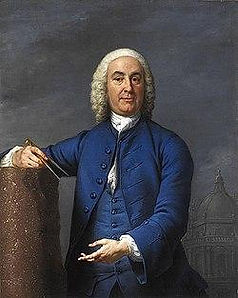
James Gibbs
1714
James Brydges inherits the Chandos barony and is elevated to Earl of Carnarvon.
1717-1718
George Frideric Handel, perhaps the most illustrious of Brydges’ protégés, becomes composer-in-residence at Cannons. During this residency, he composes the celebrated Chandos Anthems – a series of eleven sacred works that blend German richness with English choral tradition. Patronage from the Earl of Carnarvon gives Handel space, musicians and freedom to refine the style that would make him a national treasure.
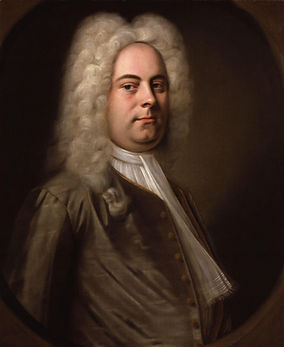
George Frideric Handel
1719
James Brydges is made 1st Duke of Chandos by King George I.
1800
What is now Brydges Place (originally Dawson’s Alley, probably named after William Dawson, who farmed on the Bedford Estate in the 1620s) is known as Taylor’s Rooms or Taylor’s Buildings.
1872
Brydges Street is renamed Catherine Street in commemoration of Lady Catherine Brydges and the role she placed in a successful real estate empire that reshaped the West End and set the template for elegant city living.
1904
During redevelopment to accommodate the construction of the London Coliseum, the narrow alleyway of Taylor’s Buildings is slightly straightened and renamed Brydges Place.
1950s
Two Brydges Place becomes home to Festival Club, a private gay member’s club founded by Canadian entrepreneur Ted Rogers-Bennett. At a time when homosexuality was still criminalised in Britain, the club offered discretion and safety.

Newspaper advertisement
1982
Drawn to the character of the building, Rod Lane takes over Two Brydges Place. Where the Duke of Chandos had gathered artists and orchestras, Lane begins bringing together actors, writers and broadcasters, and attracts London’s creative minds. The club’s charismatic Peruvian co-owner, Alfredo Fernandini, introduces the Pisco Sour to London’s cocktail scene and it becomes a signature drink at Two Brydges Place, long before catching on elsewhere.
2018
With rising costs and dwindling membership, Two Brydges Place closed its doors.
2019
A group of loyal members step in – not to rebrand, but to reclaim their club. They restore the original architecture, reignite the fires, and breathe life into the club once more.

Club reignited
2020
Although the COVID-19 pandemic sees 20% of Britain’s nightclubs close, Brydges Place returns triumphantly and with purpose – not chasing trends but embodying continuity, culture and community.

The place to be, not to be seen
bottom of page